
Blog
Types of Condensate Traps and Their Differences

Types of Condensate Traps: Differences Between Thermodynamic, Thermostatic, and Float Traps
A condensate trap is a special automation component that allows the discharge of condensed liquid (condensate) in steam systems while ensuring that the steam remains in the system. For a steam system to operate efficiently, safely, and with energy savings, it is crucial to select condensate traps that meet the system’s requirements.
In this article, we will provide a detailed comparison of the three most commonly used types of condensate traps — thermodynamic, thermostatic, and float traps. You will learn about the operating principles, advantages, applications, and selection criteria for each type to determine which is suitable for your system.
Why is a Condensate Trap Necessary?
In a steam system, the steam condenses into condensate after completing its function. If this condensed water remains in the system:
- Heat transfer slows down
- The risk of corrosion increases
- Water hammer may occur
- Energy efficiency decreases
This is where the condensate trap comes into play. While discharging the condensed water and other non-condensable gases, it keeps the live steam within the system. Choosing the right condensate trap is critical for the efficiency of the steam system.
Click to explore the Unox condensate trap category.
Thermodynamic Traps
Thermodynamic traps operate by utilizing the pressure difference between the condensed water and live steam. A disk inside the trap rises when condensate arrives, allowing discharge. When steam reaches the trap, the disk closes, keeping the steam in the system.
Advantages:
- Easy installation thanks to its compact and robust design
- Resistant to water hammer and high pressure
- Can operate over a wide pressure range
- Easy to maintain
Disadvantages:
- Vibrating operation may be observed at low flow rates
- Frequent movement of the disk may cause wear over time
Scope of application:
- Main steam lines
- Simple automation lines
- Drying systems
- Irons, presses, and small steam-powered devices
“For detailed information, explore the Unox condensate trap category.

Thermostatic Traps
Thermostatic traps operate by detecting the temperature difference between steam and condensed water. They usually contain an expanding metal diaphragm or bimetallic element. When the condensate is cold, the valve opens to allow discharge. When steam arrives, the temperature increase causes the valve to close.
Advantages:
- High energy efficiency
- Maximizes the benefit from latent heat
- Operates quietly
- Effectively vents air
Disadvantages:
- Response time may be longer during sudden temperature changes
- Performance may decrease if installation is not done correctly
Scope of application:
- Superheated steam lines
- Auxiliary lines
- Turbine drainage systems
- Steam-jacketed pipes
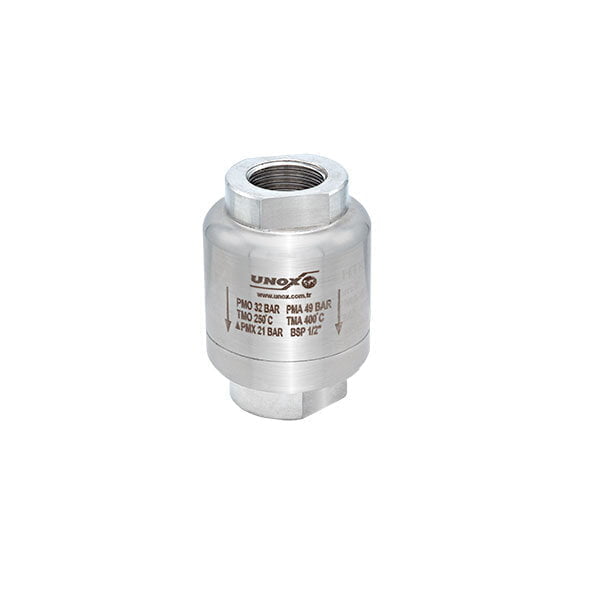
Float Traps
Float traps operate based on the principle of density difference. The float inside the device senses the condensate level and opens or closes the valve accordingly. These types of condensate traps are generally preferred for large-volume systems.
Advantages:
- Provides continuous and balanced discharge
- High performance with large condensate volumes
- Operates quietly and without vibration
- Resistant to water hammer
Disadvantages:
- Larger and takes up more space compared to other types
- Requires horizontal installation
Scope of application:
- Heat exchangers
- Ovens, cooking kettles
- Chemical and food plants
- Pressurized boilers, laundry systems
Also check out our vacuum breakers and steam separator products.
Steam separators for steam line protection.

Why is Choosing the Right Condensate Trap Important?
Choosing a condensate trap is not just about discharging condensate. Selecting the wrong product can:
- Lead to energy loss
- Increase the frequency of failures
- Cause a decrease in system performance
The following criteria should be considered for the correct selection:
- Operating pressure of the steam line
- Condensate volume and flow rate
- Ambient temperature and external factors
- Risk of corrosion
- Discharge rate and installation position
Specific needs vary for each application. At Unox Valve, we provide support with our team of expert engineers to help select the condensate trap suitable for your system.
Conclusion: Make Informed Decisions When Selecting a Condensate Trap
Choosing the right option among thermodynamic, thermostatic, and float condensate traps directly affects not only system performance but also maintenance costs and energy consumption.
At Unox, we offer a wide range of condensate trap products to meet your needs. Whether it’s a small-scale system or a large industrial facility, our expert team provides the most suitable solution.
Get in touch and let’s optimize your condensate systems together. You can visit our Unox Online website to place an order online.
condensate trap, types of condensate traps, differences between types of condensate traps, condensate trap, thermodynamic condensate trap, Unox condensate trap, what is a condensate trap, condensate trap applications, pressurized steam systems, steam automation, energy efficiency, steam separator, steam trap, vacuum breaker, float condensate trap, thermostatic condensate trap, thermodynamic condensate trap