



Blog
What is a Knife Valve? Applications, Advantages, and a Guide to Choosing the Right One

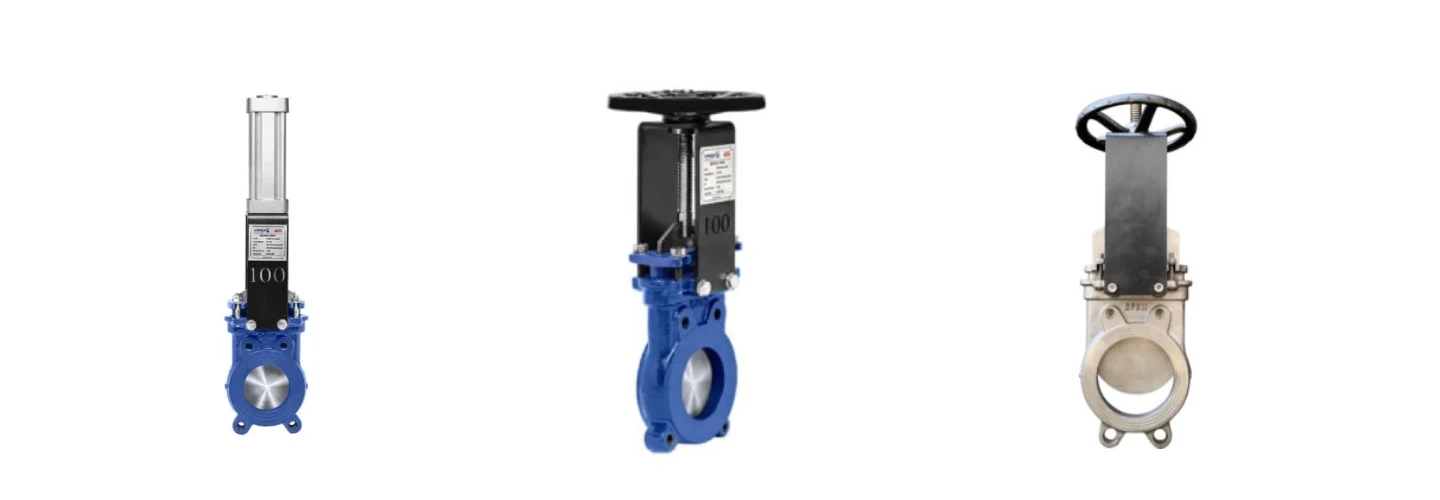
Reliable flow control in industrial facilities is crucial for process efficiency and equipment longevity. Especially in systems containing solid particles, dense fluids, or fibrous materials, standard valves may not always deliver adequate performance. In such challenging applications, a knife gate valve is preferred as a specialized valve solution that provides high efficiency.
In this article, we will explore in detail what a knife gate valve is, how it works, its applications, its advantages, and the key factors to consider when selecting one.
What is a Knife Valve?
A knife gate valve is a type of industrial valve designed to control fluids containing solid particles, dense materials, or viscous substances. Known as a knife gate valve in English, this valve type gets its name from its sharp-edged disc (knife-shaped gate) used to cut off the flow.
Unlike traditional gate valves, knife gate valves feature a thin and sharp-edged gate. Thanks to this design, they can operate effectively in demanding processes such as slurry, wastewater, pulp, mineral-containing fluids, and similar challenging applications.
How Does a Knife Valve Work?
The basic operating principle of a knife gate valve is quite simple:
- When the valve is opened, the knife-shaped gate is completely withdrawn from the flow path.
- When the valve is closed, the gate moves downward to stop the flow.
- The sharp-edged gate design provides more effective shut-off even in fluids containing solid particles.
Knife gate valves generally have two different operating modes:
- Manual knife gate valve: It is controlled using a handwheel or lever.
- Actuated knife gate valve: It is operated automatically using a pneumatic, hydraulic, or electric actuator.
In facilities requiring automation, actuated knife gate valves simplify process control and enhance operational reliability.
What Are the Applications of Knife Gate Valves?
Knife gate valves are widely used, especially in industries where dense and challenging fluids are present.
1. Wastewater Treatment Plants
Solid particles and sludge present in wastewater can cause clogging and performance issues in standard valves. Knife gate valves provide reliable flow control in these applications.
Usage areas:
- Sludge lines
- Filtration systems
- Treatment processes
- Waste transfer lines
2. Mining Industry
In mining facilities, controlling fluids with high mineral content is of great importance. Knife gate valves are preferred in applications involving abrasive and dense fluids.
3. Pulp and Paper Industry
Fibrous fluids in pulp form used in paper production require specialized valve solutions. Knife gate valves deliver high performance in these processes.
4. Chemical Industry
Knife gate valves with different material options can be used for the safe control of dense or particle-containing fluids used in chemical processes.
5. Energy and Biomass Facilities
Knife gate valves provide effective solutions in applications such as fuel transfer, ash handling systems, and similar operations.
What are the Advantages of Knife Valve?
1. High Performance in Fluids Containing Solid Particles
One of the most important advantages of knife gate valves is their ability to operate effectively in fluids containing solid materials.
2. Low Pressure Loss
When fully open, the flow path remains largely unobstructed, resulting in low pressure loss and contributing to energy efficiency.
3. Compact Design
Knife gate valves have a more space-saving design compared to other valve types. This feature provides an advantage, especially in facilities where space is limited.
4. Easy Maintenance
Thanks to their simple mechanical design, maintenance operations are easy. Under suitable operating conditions, they can provide a long service life.
5. Automation Compatibility
They can be easily integrated into automation systems by being used together with pneumatic or electric actuators.
Differences Between Knife Gate Valves and Gate Valves
Although knife gate valves and gate valves appear similar in terms of operating principles, their intended applications are different.
| Feature | Knife Gate Valve | Gate Valve |
|---|---|---|
| Purpose of use | Fluids containing solid particles and dense fluids | Clean liquid and gas applications |
| Gate design | Thin and sharp-edged blade | Thicker gate |
| Risk of clogging | Lower | Higher with solid materials |
| Application area | Wastewater, mining, paper | Water, steam, general industry |
What Should Be Considered When Selecting a Knife Gate Valve?
The following criteria should be evaluated for the correct valve selection:
Fluid Properties
- Fluid density
- Solid particle content
- Chemical properties
- Abrasiveness level
Pressure and Temperature Values
The operating pressure and temperature values of the valve must be compatible with the process conditions.
Body and Seal Material
Depending on the application:
- Stainless steel
- Carbon steel
- Special alloys
- Suitable sealing materials
should be preferred.
Manual or Actuated Operation
In systems requiring frequent opening and closing or remote control, actuated models may be more suitable.
Conclusion: For Which Applications Is a Knife Gate Valve the Right Choice?
Knife gate valves are among the important industrial valve solutions that provide reliable flow control in demanding process conditions such as wastewater, mining, paper, chemical, and energy industries.
If your system contains dense, particle-laden, or fibrous fluids, a properly selected knife gate valve can reduce maintenance costs, improve process continuity, and contribute to operational efficiency.
With UNOX expertise, you can get information about knife gate valve solutions suitable for your application and make the most appropriate valve selection for your process requirements.