



Blog
Spring Return Electric Actuator: Safe and Precise Valve Control in HVAC Systems

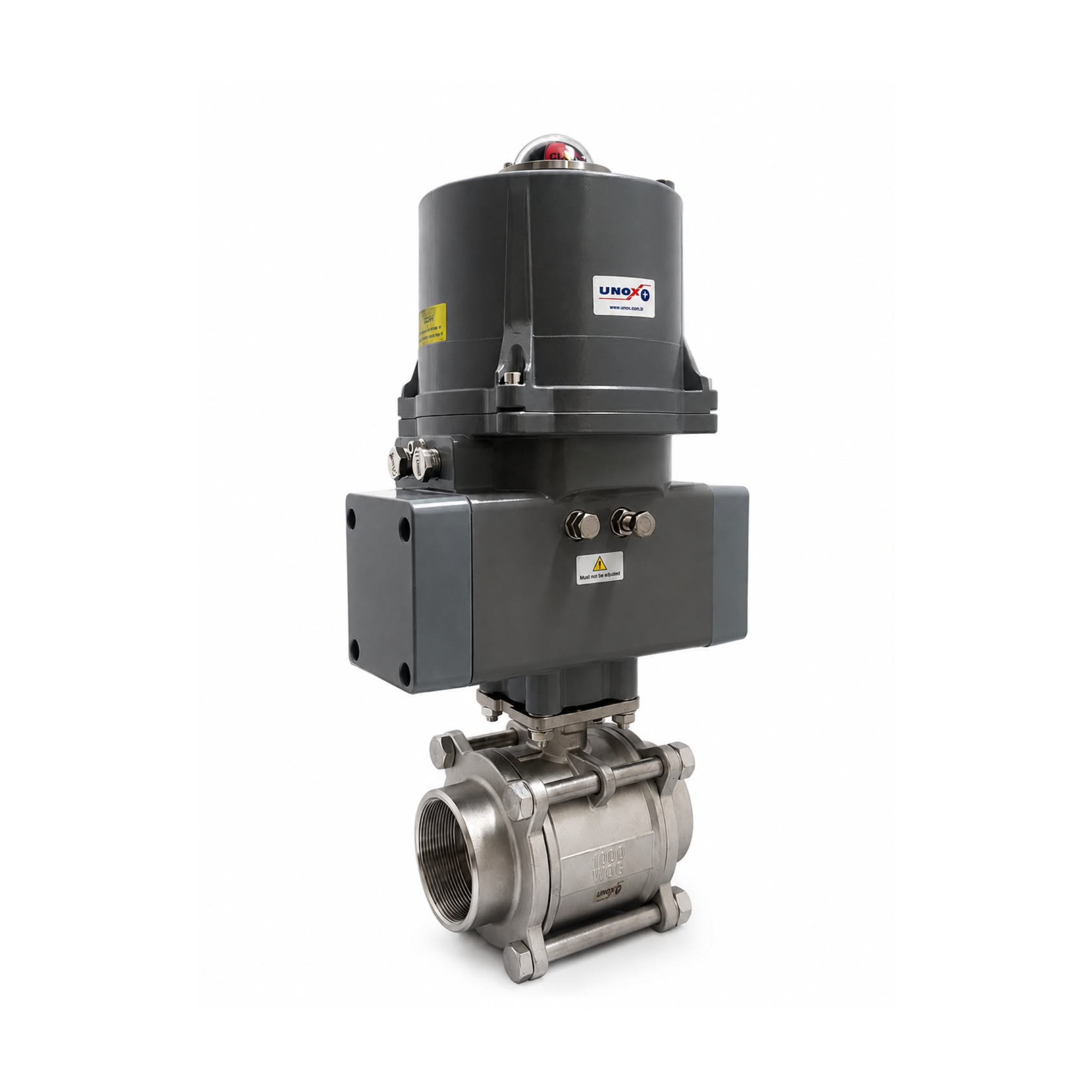
Valve control in HVAC and building automation systems plays a critical role in terms of comfort, energy efficiency, and system safety. In this context, spring-return electric actuators offer a significant advantage by moving the valve to a predefined safe position in the event of a power failure or loss of the control signal.
What Is a Spring-Return Electric Actuator?
A spring-return electric actuator is a control device that uses electrical energy to open, close, or position a valve at a specific point, while incorporating a mechanical spring mechanism.
During normal operation, the motor moves the valve to the desired position while tensioning the spring mechanism. In the event of a power failure, the mechanical energy stored in the spring is released, returning the valve to a predetermined fail-safe (safe) position. Depending on the application, this position can be either open or closed.
Safe Position During Power Outages
The most important advantage of the spring-return feature is that it helps prevent the system from remaining in an uncontrolled position during a power failure.
For example, in an HVAC system, leaving an outdoor air damper open during a power outage can pose a risk to system components, particularly in cold weather conditions. Similarly, in certain heating, cooling, or steam applications, returning the valve to a specific position may be necessary for system safety.
Therefore, when selecting an actuator, attention should be paid not only to the torque and operating time but also to the position the valve should move to in the event of a power failure.
Applications in HVAC Systems
Spring-return electric actuators can be used in various HVAC and automation applications. The main areas of application include:
- Air Handling Units (AHUs)
- Fan Coil Systems
- Ventilation systems
- Heating and cooling systems
- Water Control Valves
- Air Dampers
- Building Automation Systems
- Valve Control Applications
In HVAC applications, spring-return actuators can be used with quarter-turn control devices such as ball valves and butterfly valves, as well as in certain damper applications.
Advantages of Spring-Return Actuators
1. Fail-Safe Operation
When power is lost, the actuator returns the valve to a predetermined safe position, helping prevent the system from continuing to operate in an uncontrolled manner.
2. Precise Valve Control
Electric actuators can be used with on/off, three-point, or modulating control options, depending on the requirements of the system. This allows the valve position to be managed in a controlled manner by the automation system.
3. Contribution to System Safety
Especially in applications where a specific valve position must be maintained during power outages, the spring mechanism provides an additional layer of safety.
4. Compatibility with HVAC and Building Automation Systems
Actuators can be offered with various control options to work seamlessly with HVAC control systems and building automation infrastructure. Therefore, selecting the right model should be evaluated based on the control signal of the existing automation system as well as the valve specifications.
Difference Between Spring-Return and Standard Actuators
A standard, non-spring-return electric actuator generally maintains its current position when power is lost. In contrast, a spring-return model uses a mechanical spring to move to a predefined safe position in the event of a power failure.
Therefore, the choice between the two types of actuators should not be based solely on price or motor power. The system’s behavior in the event of a power failure and its safe operating requirements should be determined first.
What Should Be Considered When Selecting an Actuator?
The following technical specifications should be evaluated when selecting the right spring-return electric actuator:
- Supply voltage: It must be compatible with the system’s electrical infrastructure.
- Torque rating: Sufficient torque should be selected to ensure that the actuator can reliably operate the valve.
- Operating time: It is important that the valve or damper moves within the required time.
- Control type: The required control mode—on/off, three-point, or modulating—should be determined.
- Fail-safe direction: It should be determined whether the valve needs to be open or closed in the event of a power failure.
- Valve compatibility: The actuator’s connection type, rotation angle, and mechanical specifications must be compatible with the valve.
- Operating conditions: Ambient temperature, frequency of use, and installation conditions should be taken into consideration.
Especially in safety-critical applications, it is not sufficient for the actuator to simply be spring-return; the correct fail-safe direction, torque rating, and suitability for the application must all be evaluated together.
Conclusion
The Unox Spring-Return Electric Actuator is a solution that can be considered for reliable valve control in HVAC, ventilation, heating, cooling, and building automation systems. Thanks to its spring-return mechanism, it helps the valve return to a predetermined safe position in situations such as a power outage.
The combination of a compact design, precise control, and fail-safe operation makes spring-return actuators a preferred choice for applications where system safety, operational continuity, and controlled automation are essential.
Note: Technical specifications such as supply voltage, torque, operating time, control type, and valve compatibility may vary depending on the specific product model. It is recommended to check the technical documentation for the relevant model before installation or application.