
Blog
How to Select a Compensator? A Guide to Choosing the Right Product Based on DN, PN, Temperature, and Fluid

How to Select a Compensator? A Guide to Choosing the Right Product Based on DN, PN, Temperature, and Fluid
Compensator selection in a pipeline is not a process that can be carried out based solely on pipe diameter. The system’s operating pressure and temperature, the fluid flowing through it, the movements to which the pipeline is exposed, the connection type, and the intended application must all be evaluated together.
An incorrectly selected compensator may initially appear to be only a minor mismatch, but over time it can lead to sealing problems, vibration, stress at connection points, and equipment damage.
Especially in pump, boiler, HVAC, steam, hot water, compressed air, and industrial process lines, selecting the correct compensator is an important design criterion for ensuring the reliability of the piping system.
So, how do you select the right compensator?
In this guide, we will examine step by step the key criteria that need to be considered when selecting a compensator, particularly DN, PN, temperature, fluid, and movement capacity.
The First Step in Compensator Selection: Determining the System Requirements
Instead of starting the compensator selection process by directly choosing a product model, the operating conditions of the piping system should first be clearly determined.
The following questions should be answered:
- What is the nominal diameter of the pipeline?
- What pressure does the system operate at?
- What are the minimum and maximum operating temperatures?
- What fluid flows through the pipeline?
- How much expansion or movement occurs in the pipeline?
- Where will the compensator be installed?
- What is the connection type?
- Is there any vibration in the system?
- How close is the equipment to a pump, fan, or other source of vibration?
- What is the primary function expected from the compensator?
Selecting a product based solely on a statement such as “I need a DN100 compensator” without determining these factors is not the correct approach.
Because different compensator solutions may be available for the same DN size, depending on the pressure, temperature, and fluid conditions.
1. DN Value: How Is the Compensator Diameter Determined?
One of the first values to check when selecting a compensator is the DN (Nominal Diameter).
DN refers to the nominal size of the pipeline. For example:
- DN25
- DN50
- DN80
- DN100
- DN150
- DN200
Compensators in different sizes can be used, such as DN25, DN50, DN100, and DN200.
However, the important factor here is not simply that the DN value is the same.
The compensator’s:
Pipe diameter + connection size + flange standard + installation method
must be evaluated together.
For example, a compensator used in a DN100 pipeline cannot be specified simply as “DN100.” The flange dimensions and connection standard must also be checked.
Why Should You Not Select a Compensator Based Solely on DN?
Because the primary function of a compensator is not simply to connect two sections of pipe.
Compensators ;
- Axial movement,
- Lateral movement,
- Vibration,
- Thermal expansion,
- mechanical stress
is selected to accommodate system movements such as these.
Therefore, DN is the starting point of the selection process, not the final criterion.
2. PN Value: What Pressure Rating Should the Compensator Withstand?
The second important criterion when selecting a compensator is the PN pressure rating.
The system’s operating pressure must be compatible with the compensator’s allowable working pressure.
For example, if your system operates at high pressure, it is not appropriate to select a low-pressure-rated compensator based solely on the DN value.
The following distinction should also be made:
System pressure ≠ Maximum pressure rating of the compensator
The pressure, temperature, and operating conditions specified in the product’s technical specifications must be evaluated together.
For example, some metal bellows compensators in the UNOX product range are available with operating pressures up to PN16 and high-temperature resistance depending on the model, while externally pressurized models offer different temperature and expansion capabilities. Therefore, the product’s technical datasheet should always be checked directly when making a selection.
Practical Check
Before selecting a compensator, write down the following two values side by side:
System operating pressure: … bar
Compensator operating pressure: … bar
The allowable values under the operating temperature conditions should then be checked separately.
3. Operating Temperature: A Critical Factor in Determining the Compensator Material
One of the most frequently overlooked criteria when selecting a compensator is temperature.
A system may:
- Cold water,
- Hot water,
- Hot water,
- Steam
- Hot air,
- Gas,
- Thermal oil
It can operate with various fluids such as these.
The temperature and operating conditions vary for each fluid.
Therefore, the compensator’s minimum and maximum operating temperatures must always be checked.
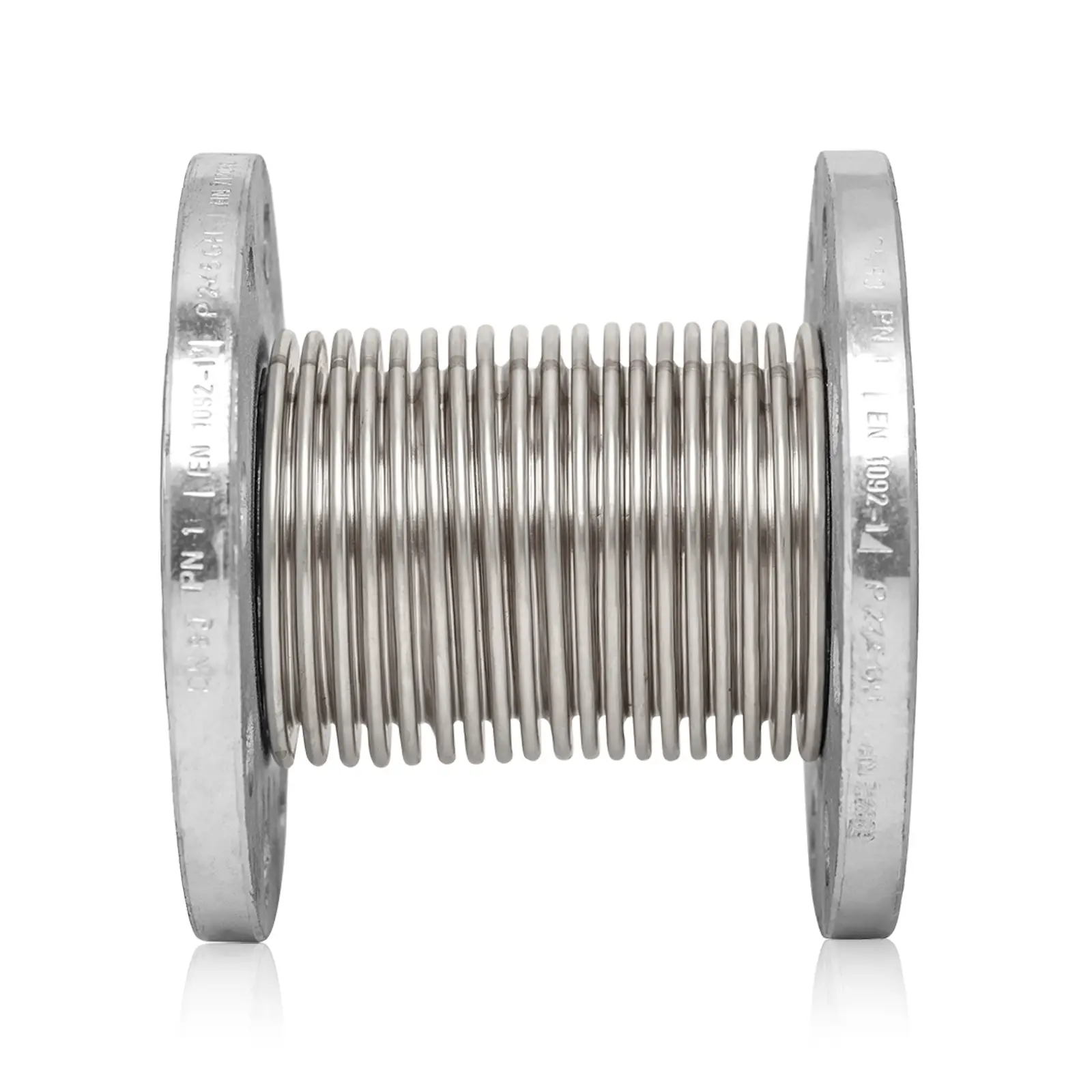
Especially for metal bellows compensators, temperature resistance may vary depending on the technical design of the product. In UNOX’s 2026 product documentation, some metal bellows models are specified with maximum operating temperatures ranging from -80°C to +427°C, while certain externally pressurized models are rated for temperatures ranging from -196°C to +600°C.
Therefore:
“A compensator will be used in the steam line.”
this information alone is not sufficient.
The operating temperature and pressure of the steam must also be known.
4. Fluid Type: Not Every Compensator Is Suitable for Every Fluid
One of the most important questions to ask when selecting a compensator is:
“What will flow through the compensator?”
The fluid:
- water,
- Hot water,
- Steam
- Air
- Natural gas,
- Oil,
- chemical liquid
It could be.
The chemical and physical properties of the fluid require evaluation in terms of the materials used for the compensator body, bellows, rubber components, gaskets, and internal lining.
For example, the UNOX product range includes not only rubber expansion joints but also stainless steel bellows expansion joints and expansion joints with different structural characteristics.
Therefore:
“Can I use this product because it is DN100?”
The answer to this question cannot be determined based on the DN size alone.
The actual question is:
“Is this expansion joint suitable for DN100, at this pressure and temperature, and for this fluid?”
It should be.
5. Expansion Amount: Check the Movement Capacity of the Expansion Joint
The amount of movement that the expansion joint needs to accommodate in the piping system is also a critical parameter in product selection.
The piping system may expand or contract due to temperature changes.
Especially in long pipelines, the thermal movement caused by temperature changes must be taken into account.
At this point, the movement capacity of the expansion joint should be checked.
For example, UNOX’s externally pressurized flanged expansion joints are available in models designed to accommodate different expansion movements. The 2026 product documentation lists expansion options of 30 mm, 60 mm, and 90 mm.
Therefore, when selecting a product:
“What is the DN size?”
In addition to asking:
“How much movement does it need to accommodate?”
The question “How much movement does it need to accommodate?” should also always be asked.
6. Why Is the Installation Location of the Expansion Joint Important?
The same product may not perform the same function at different points in the piping system.
For example, the expansion joint:
- at the pump suction
- at the pump discharge
- at the boiler connection
- in a long pipeline
- in an HVAC system
- at the connection to vibrating equipment
can be used.
Near pumps and similar equipment, the expansion joint may be expected not only to accommodate thermal expansion but also to limit vibration and mechanical movements.
Therefore, it is not advisable to select an expansion joint without first determining its intended function.
Rubber Expansion Joint or Metal Expansion Joint?
This is one of the most common questions when selecting an expansion joint.
However, rather than giving a general answer to the question “Which one is better?”, the selection should be based on the type of system in which it will be used.
Rubber Expansion Joint
Rubber expansion joints can be preferred, particularly in applications where damping vibration and mechanical movements is important.
For example:
- pump connections
- HVAC systems
- water piping systems
- various mechanical systems
can be used in applications such as these.
Metal Expansion Joint
Metal bellows expansion joints can be considered for applications involving high temperatures and various types of mechanical movement.
In particular:
- steam lines
- hot fluid lines
- high-temperature processes
- industrial piping systems
may be preferred for applications such as these, depending on the technical specifications of the product.
The UNOX product range includes both rubber expansion joints and various metal/external pressure expansion joint options.
5 Common Mistakes When Selecting an Expansion Joint
1. Considering Only the DN Size
Even if the DN size is correct, the product may not be suitable if the pressure, temperature, or fluid is incompatible.
2. Failing to Check the Operating Temperature
Especially in hot water, steam, and high-temperature processes, the operating temperature must not be overlooked.
3. Failing to Compare the PN Rating with the System Pressure
The pressure capacity of the expansion joint should be evaluated in conjunction with the system operating conditions.
4. Selecting a Product Without Calculating the Required Movement
The movement capacity of the expansion joint must be compatible with the actual movement requirements of the piping system.
5. Failing to Consider the Installation Conditions
The product’s connection type, installation space, fixed points, and guiding system are also part of the selection process.
What Information Is Required to Select the Right Expansion Joint?
When requesting a quotation or conducting technical product research for an expansion joint, preparing the following information will significantly facilitate the selection process:
| Technical Data | Example |
| Nominal diameter | DN100 |
| Pressure | PN16 |
| Operating temperature | +180 °C |
| Fluid | Steam |
| Connection | Flanged |
| Movement | ±30 mm |
| Application point | Boiler outlet |
| Pipe type | Industrial process |
Once this information is available, instead of simply searching for “DN100 expansion joint price,” you can research an expansion joint that is suitable for the specific application.
Why Is Technical Support Important When Selecting an Expansion Joint?
A compensator should not be regarded as a simple connection element that merely connects two flanges in a pipeline.
The product’s
- pressure,
- temperature,
- fluid
- movement
- connection
- material
- installation
The conditions should be evaluated together.
Especially in high-temperature, high-pressure, or critical process lines, it is important to make the selection based on the product’s technical documentation.
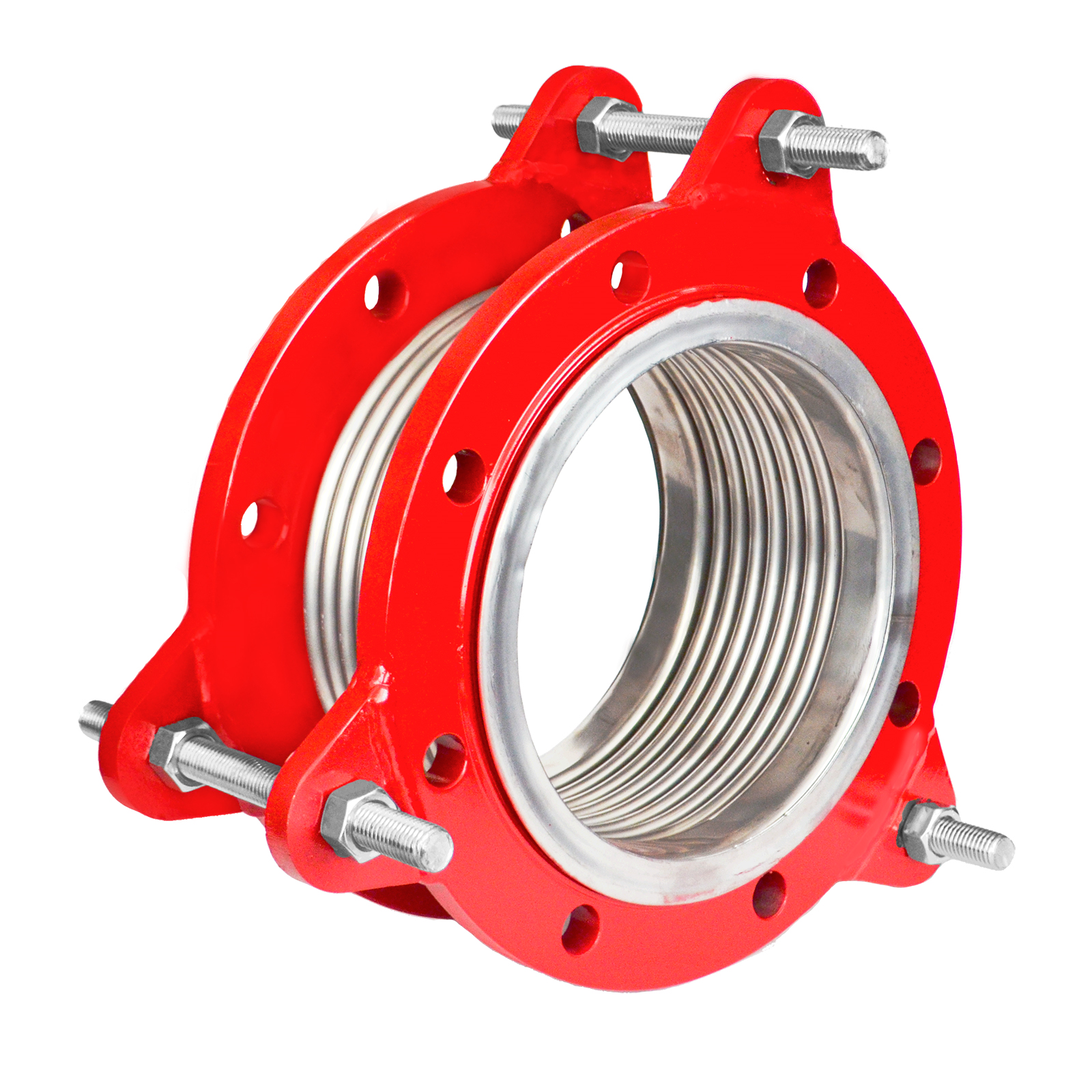
UNOX’s compensator product range includes various solutions, such as threaded rubber, flanged rubber, externally pressurized flanged, externally pressurized weld-neck, metal bellows, and gimbal-type seismic expansion joints.
This variety also demonstrates that compensator selection should not be based on a single standard product.
What Information Should You Provide to UNOX to Find the Right Compensator?
If you are looking for a compensator for your project, sharing the following information can provide a sufficient starting point:
DN:
PN / Operating Pressure:
Operating Temperature:
Fluid:
Connection Type:
Expected Movement:
Application Area:
Photo or Technical Information of the Existing Compensator, if Available:
Based on this information, the technical specifications of the product suitable for your application can be evaluated.
The right compensator is not simply one with the correct diameter; it is a compensator capable of meeting the system’s pressure, temperature, fluid, and movement conditions as a whole.
You can explore the solution suitable for your application based on UNOX’s existing range of compensator products and technical options.