



Blog
How to Choose a Pneumatic Actuator? A Guide to Torque and Operating Pressure

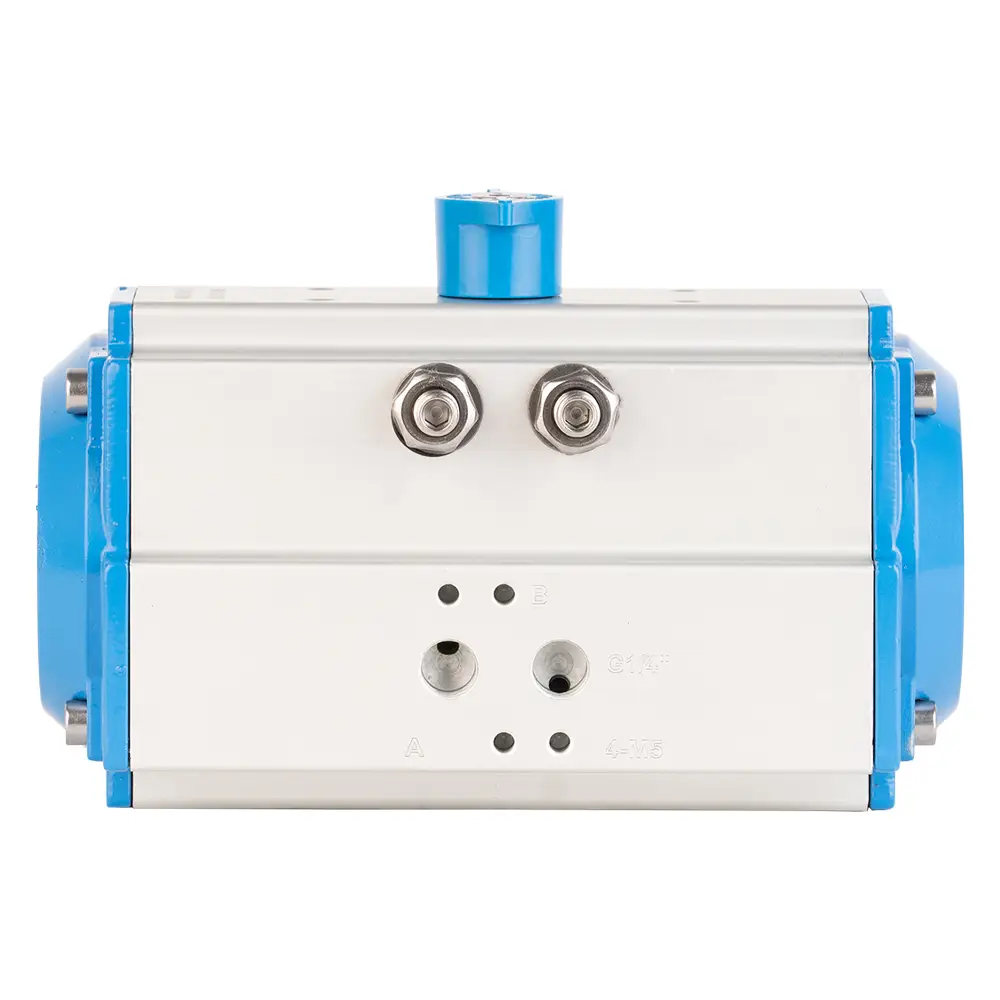
Pneumatic actuators, which are used to automatically open and close industrial valves, play an important role especially in applications where fast and reliable valve control is required. Widely used with quarter-turn valves such as ball, butterfly, and plug valves, the correct selection of pneumatic actuators is crucial for ensuring safe and efficient system operation.
An incorrectly selected actuator may fail to move the valve with sufficient force or may be oversized, increasing costs unnecessarily. Therefore, when selecting an actuator, it is not enough to consider only the valve diameter; valve torque, operating air pressure, actuator type, valve connection, and operating conditions must all be evaluated together.
What is Pneumatic Actuator?
A pneumatic actuator is an automation device that converts the energy of compressed air into mechanical motion, enabling the connected valve to open or close.
They are particularly used with valves such as ball valves and butterfly valves that operate with a 90° rotary motion. Pneumatic actuators are preferred for their advantages, including fast opening and closing, easy integration into automation systems, and reliable operation in demanding industrial environments.
When the actuator suitable for the system is selected, the valve can be controlled with the required force and speed.


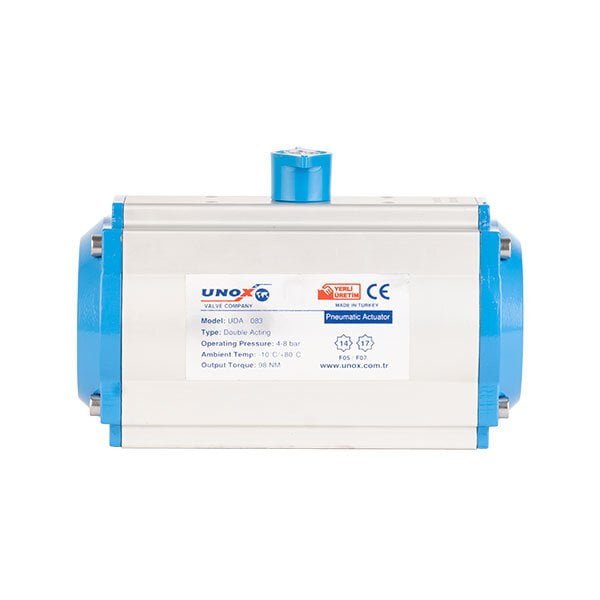

The Most Important Criterion in Pneumatic Actuator Selection: Torque
One of the most important values to consider when selecting a pneumatic actuator is torque.
Torque is the rotational force generated by the actuator to move the valve and is expressed in Nm (Newton metres).
τ=(3)(6)sin(90∘)=18N m
Only the perpendicular component of F causes the lever to rotate.
F
N
F
r
m
r
θ
°
θdönme noktasır = 3 mθ = 90°F⊥ = 6 NFτ = 18 N m
Give Feedback
The torque required to open and close a valve can vary depending on the valve type, size, operating pressure, fluid, and friction conditions inside the valve.
Therefore, it is not correct to select an actuator simply by saying, “This actuator is used for a DN50 valve.” Two different valves with the same DN size may require different torque values.
The Correct Approach:
Required valve torque → Safety margin → Actuator output torque
This should be evaluated accordingly.
The actuator’s output torque must be sufficiently higher than the torque required by the valve. The torque values and operating pressure tables provided in the manufacturer’s catalogs should be used as the primary reference at this point.
Why Is Operating Air Pressure Important?
The torque generated by a pneumatic actuator is directly affected by the operating air pressure used.
For example, the torque value of an actuator at a specific air pressure may differ from its torque value at a lower pressure. Therefore, when selecting an actuator, the pressure and torque values provided in the actuator catalog should be evaluated together.
It is not correct to select an actuator based solely on its model without knowing the available air pressure at the facility.
The following information should be determined before selecting an actuator:
- Minimum operating air pressure
- Normal operating air pressure
- Maximum operating air pressure
- Required opening and closing time
- Continuous operation or opening/closing frequency
Especially if the facility’s actual operating pressure differs from the reference pressure specified in the catalog, the actual torque provided by the actuator must be checked.
Single-Acting or Double-Acting?
Another important decision when selecting a pneumatic actuator is whether to choose a single-acting or double-acting actuator.
In double-acting pneumatic actuators, compressed air is used to open and close the valve. These types of actuators are widely used in standard automatic opening and closing applications.
Single-acting pneumatic actuators, on the other hand, feature a spring mechanism. When the air supply is interrupted, the actuator returns to its predefined fail-safe position using spring force.
Therefore, single-acting actuators may be considered for applications where it is critical for the valve to remain in a specific position in the event of a power or air supply failure.
The following question should be asked when making the selection:
“What position should the valve be in when the air supply is interrupted?”
- If it needs to remain open → Normally Open (NO)
- If it needs to remain closed → Normally Closed (NC)
This decision is particularly important in safety-critical processes.
The Actuator and Valve Must Be Compatible
Selecting an actuator with the correct torque rating alone is not sufficient. There must also be mechanical compatibility between the actuator and the valve.
Key points to check:
- Valve stem size
- Actuator output connection
- Mounting flange
- Mounting holes
- Rotation angle
- Valve type
- Actuator mounting orientation
For quarter-turn valve applications, the ISO 5211 connection standard is an important reference for actuator-to-valve mounting. However, rather than relying solely on the standard, the actual connection dimensions of the valve and actuator being used should also be checked.
Actuator Selection Based on Valve Type
Pneumatic actuators can be used with different types of valves. However, the valve’s operating characteristics should be taken into account when selecting the actuator.
Ball Valves:
Since they typically operate with a 90° rotary motion, they can be easily automated using pneumatic rotary actuators.
Butterfly Valves:
They can be used together with pneumatic actuators for automatic opening and closing applications in large-diameter pipelines.
What matters here is not only the valve diameter, but also knowing the valve’s actual operating torque.
Operating Temperature and Environmental Conditions
The environment in which the actuator will be used is also one of the selection criteria.
The actuator’s:
- Ambient temperature,
- Environmental effects caused by fluid temperature,
- Humidity
- dust
- Corrosive atmospheres,
- Explosive atmospheres,
must be suitable for.
Especially for actuators intended for outdoor use or harsh industrial environments, the protection rating and material properties should be taken into consideration.
In areas where there is a risk of explosion, the Ex/ATEX compliance required for the application should also be evaluated.
Key Factors to Check When Selecting an Actuator
Preparing the following information before ordering or selecting a pneumatic actuator will help speed up the process:
| Information | Example |
|---|---|
| Valve type | Ball / Butterfly / Plug |
| Valve size | DN50 |
| Required torque | 80 Nm |
| Operating air pressure | 6 bar |
| Actuator type | Single-Acting / Double-Acting |
| Rotation angle | 90° |
| Valve connection | ISO 5211 |
| Operating temperature | 80 °C |
| Environment | Indoor, Outdoor environment |
| Control method | On-Off / Proportional |
| Power supply | 24V DC / 230V AC |
| Safe position | NO / NC |
Once this information is available, selecting the correct actuator becomes much easier.
Common Mistakes in Pneumatic Actuator Selection
1. Selecting an actuator based solely on the DN size
The DN value indicates the valve size; it does not, by itself, determine the torque required by the actuator.
2. Failing to take the air pressure into account
Since the actuator’s torque capacity depends on the operating pressure, the actual air pressure available at the facility must be checked.
3. Failing to account for the safety margin
Selecting an actuator with a torque rating too close to the valve torque can create a risk of insufficient performance during operation.
4. Failing to select single-acting or double-acting based on the application
The valve’s required behavior in the event of air or power failure must be determined in advance.
5. Failing to check the mechanical connection
Even if the torque rating is suitable, installation may not be possible if the valve stem and actuator connection are not compatible.
How to Select the Right Pneumatic Actuator?
The following steps can be followed to select the right actuator:
1.Determine the valve type.
Identify whether it is a ball, butterfly, or plug valve.
2. Determine the valve torque.
Check the operating torque specified by the manufacturer.
3. Evaluate the safety margin.
Make sure that the actuator’s output torque safely meets the valve’s torque requirements.
4. Determine the operating air pressure.
Check the actual air pressure that can be supplied to the actuator at the facility.
5. Select a single-acting or double-acting actuator.
6. Check the valve and actuator connection.
7. Evaluate the operating environment.
Consider temperature, humidity, corrosion, and, if applicable, explosive atmosphere conditions.
8.Determine the control equipment.
Depending on the application requirements, equipment such as a solenoid valve, limit switch box, or positioner can be included in the system.
Conclusion
When selecting a pneumatic actuator, considering only the valve size is not sufficient to determine the right product. The valve’s required torque, operating air pressure, actuator type, mechanical connection, and operating conditions should all be evaluated together.
A properly selected pneumatic actuator ensures reliable valve opening and closing while also contributing to the efficient operation of the automation system.
Explore pneumatic actuator and valve automation solutions suitable for your application with UNOX Online, and select the right product based on the criteria that best match your technical requirements.