
Blog
5 Warning Signs a Solenoid Valve Gives Before It Fails

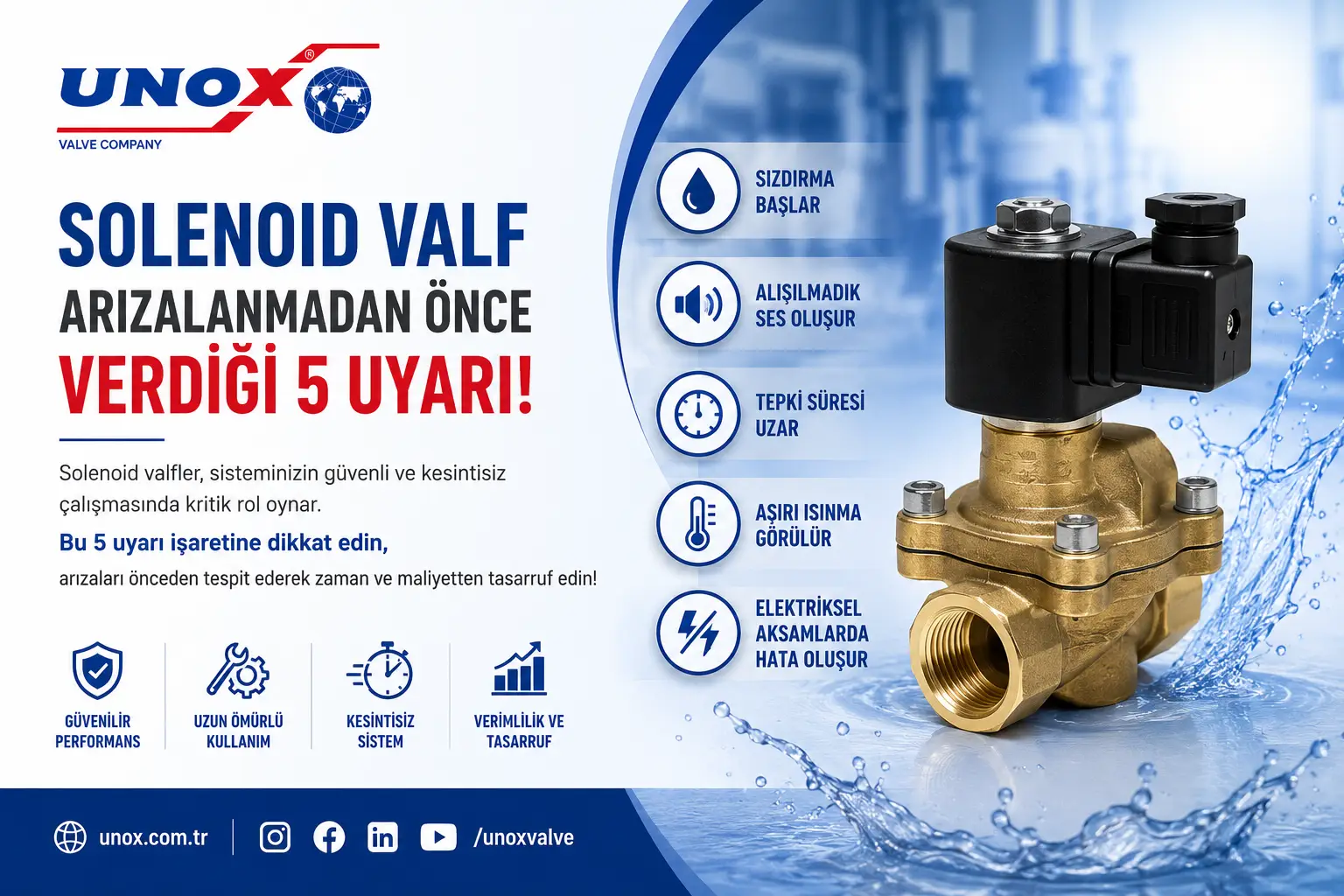
In industrial facilities, solenoid valves play a critical role in controlling the flow of liquids, gases, and steam. However, in many operations, solenoid valve failures are only detected after the equipment has completely stopped functioning. In reality, most solenoid valves exhibit various warning signs before they fail.
Identifying these warning signs early can help prevent unplanned downtime and significantly reduce maintenance costs.
1. If the Valve’s Opening and Closing Time Is Increasing
Under normal operating conditions, solenoid valves respond very quickly. If the valve takes longer to open or close than it used to, this may indicate a potential issue.
- The coil may have weakened.
- Dirt or debris may have accumulated in the internal mechanism.
- The spring mechanism may be worn out.
Over time, this condition can lead to incomplete closure or even complete failure to operate.
2. If the Coil Is Overheating
A certain level of heat during operation is considered normal. However, if the coil becomes too hot to touch, it should be taken as a warning sign.
Possible causes:
- Incorrect voltage usage
- Continuous energized operation
- Weakening of the coil insulation
- High ambient temperature
Overheated coils can burn out quickly, rendering the valve inoperative.
3. If Unusual Noises Are Heard
Vibration, humming, or clicking sounds during operation may be a sign of an impending failure.
Possible causes include:
- Low supply voltage
- Loose components
- Diaphragm wear
- Pressure imbalance
may be included.
Regular sound checks can help detect many faults at an early stage.
4. If Irregular Flow Occurs
If sudden changes occur in the amount of fluid passing through the system, the issue may be caused by the valve.
Symptoms:
- Low flow rate
- Pressure fluctuations.
- Intermittent flow
- Valve not fully opening
This condition usually occurs due to wear or contamination of internal components.
5. If Leaks and Leakage Have Started
Even small leaks in solenoid valves should not be ignored.
Common causes of leaks:
- Seal wear
- Diaphragm damage
- Loose connections
- High operating pressure
Leaks that initially appear minor can over time lead to energy loss, product loss, and equipment damage.
Conclusion
Solenoid valves typically give various signals before failure. The most common warning signs are increased opening/closing time, overheating, abnormal noises, irregular flow, and leaks.
Through periodic maintenance and regular inspections, these signs can be detected early, helping to prevent production losses and unexpected downtime.