



Blog
How to Calculate Valve Diameter?

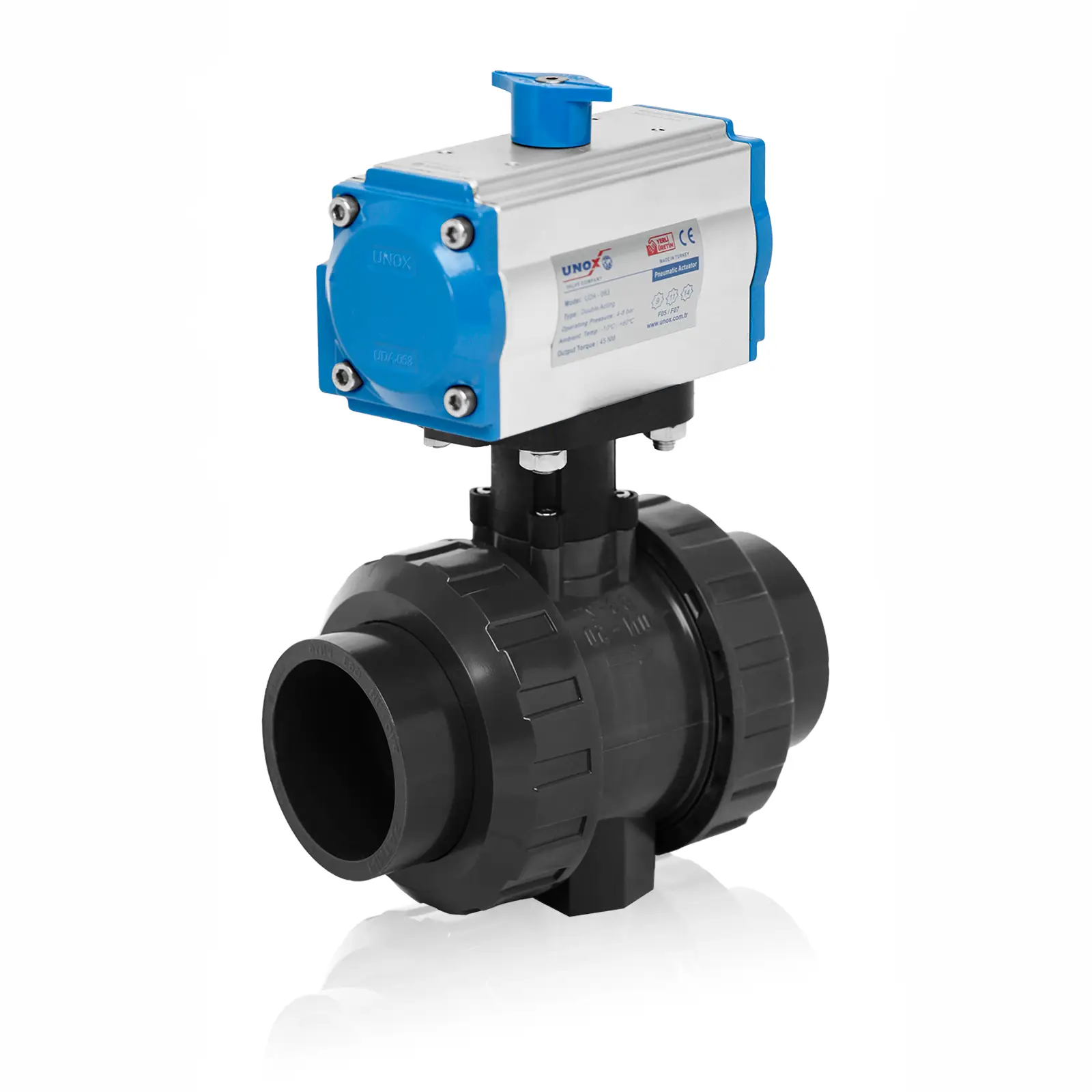
Selecting the correct valve diameter is critical to the performance and efficiency of industrial systems. In many cases, users choose a valve based solely on the pipe diameter. However, proper valve selection depends on more than just the pipe size. Factors such as flow rate, fluid velocity, pressure differential, and the characteristics of the process fluid must also be taken into account.
What Is Valve Diameter?
Valve diameter (Nominal Diameter – DN) refers to the nominal internal diameter of the pipeline to which the valve is connected.
For example;
- DN15
- DN25
- DN50
- DN100
- DN200
Values such as these are nominal sizes defined in accordance with international standards.
However, the DN value does not represent the valve’s actual internal diameter; it refers to its standardized connection size.
Factors Considered in Valve Diameter Calculation
The following information is required for proper valve selection:
1. Flow Rate (Q)
It is the amount of fluid passing through the system per unit of time.
Units:
- m³/h
- L/s
- L/dk
As the flow rate increases, a larger valve diameter is required.
2. Type of Fluid
Not all fluids behave in the same way.
For example;
- Water
- Steam
- Compressed air
- Natural Gas
- Chemical liquids
- Oil
As density and viscosity change, the required valve diameter may also change.
3. Flow Velocity
Recommended average flow velocities in industrial applications:
| Fluid | Recommended Velocity |
|---|---|
| Water | 1–3 m/s |
| Steam | 20–40 m/s |
| Compressed Air | 6–10 m/s |
| Gases | 10–20 m/s |
Excessively high velocity can cause:
- Noise
- Vibration
- Wear
- High pressure drop
causes.
4. Pressure Drop (ΔP)
The pressure drop caused by the valve is also important in diameter selection.
An undersized valve;
- high pressure drop,
- increased pump load,
- increased energy costs
may cause problems such as.
Valve Diameter Calculation Formula
The commonly used basic relationship for liquids is as follows:Q=A×V
Where:
- Q: Debi (m³/s)
- A: Pipe cross-sectional area (m²)
- V: Flow velocity (m/s)
The cross-sectional area is:A=4πD2
These two equations can be used together to calculate the pipe or valve diameter.
Example Calculation
In a system;
- Flow rate = 50 m³/h
- Fluid = Water
- Target flow velocity = 2 m/s
First, let’s convert the flow rate to cubic meters per second (m³/s).
50 / 3600
=
0,0139 m³/s
Cross-sectional Area:
0,0139 / 2
=
0,00695 m²
Diameter:D=π4A
Approximate result:
94 mm
In this case, considering the standard nominal sizes, a DN100 valve would be the appropriate choice.
Why Isn’t the Calculated Result Always Used?
In industrial applications, the nearest standard valve size is selected instead of using the exact calculated diameter.
For example;
| Calculation Result | Preferred DN |
|---|---|
| 28 mm | DN25 |
| 34 mm | DN32 |
| 47 mm | DN50 |
| 92 mm | DN100 |
| 108 mm | DN100 or DN125 |
Therefore, standard nominal diameters are taken as the basis for valve selection.
The Kv Value Should Also Be Taken Into Consideration
The diameter of a valve alone is not sufficient; the Kv value is also important in the selection process.
The Kv value represents the amount of water passing through the valve per hour at a pressure difference of 1 bar.
Two different valves with the same DN size may have different Kv values. Therefore, diameter information alone is not sufficient.
Consequences of Incorrect Valve Diameter Selection
Incorrect valve diameter selection can lead to the following problems:
- High energy consumption.
- Excessive pressure drop
- Noise and vibration
- Risk of cavitation
- Pump failures
- Low process efficiency
- Premature valve wear
- High maintenance costs
Checklist for Correct Valve Selection
Before ordering a valve, it is recommended to determine the following information:
- Fluid type
- Flow rate (m³/h)
- Operating Pressure
- Operating temperature
- Pressure difference (ΔP)
- Pipe diameter (DN)
- Connection standard (DIN, ANSI, etc.)
- Valve type (ball, butterfly, globe, gate, etc.)
- Actuator requirement (manual, pneumatic, or electric)
Conclusion
Valve diameter selection should not be based solely on the pipe size. Flow rate, flow velocity, pressure drop, fluid properties, and the valve’s Kv value should all be evaluated together. A properly calculated and correctly selected valve according to the appropriate standard ensures more efficient system operation, reduces energy costs, and extends equipment service life.
In professional projects, valve selection should be based on both manufacturer technical catalogs and engineering calculations.